- July 08 2025
- One contributor

What bank offers rock-bottom interest rates, the most flexible repayment terms, and 24/7 helplines, often with a free dinner? The Bank of Mum and Dad.
As house prices continue to rise, the barriers to entering the housing market get higher too. How can people buy their first home when it’s so difficult to even get a deposit together? In 2002, the average house cost was six times the average income. In 2022, it was 15 times more than the average income.
New Zealand has reached a point where it’s no longer enough to do all the right things. The traditional ‘get a job, save hard, don’t each avocado on toast, buy the worst house in the best street, and you can buy your own home’ no longer applies. This is where the Bank of Mum and Dad steps in.
The Bank of Mum and Dad is really just intergenerational wealth management. For different families and cultures, it all looks slightly different, but ultimately, it’s parents wanting to help their kids have a financially secure future by helping them into their first home.
And, it’s common. Research shows that the Bank of Mum and Dad has paid out a whopping $22.6 billion in financial assistance. This makes them one of the biggest ‘banks’ in NZ. The contribution on average is $108,000.
How Does the Bank of Mum and Dad Work?
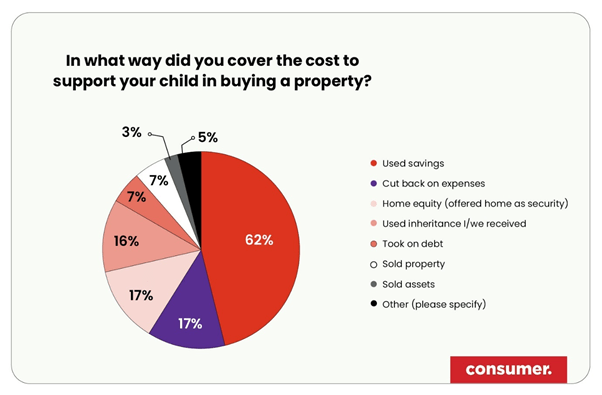
There are many ways that parents can help their kids get a foot on the property ladder.
- Financial gift: This could be money given towards the deposit, or an entire property purchased without an expectation of repayment. There can be conditions attached to this, such as making decisions around the property in the future.
- Loan: This could be interest-free or low-interest.
- Acting as a guarantor: The parents can step in and offer their home/s as a security, helping their kid get a mortgage, lowering the size of the deposit needed
- Co-ownership: Buying a property together, with both owning a percentage of the home.
- Indirect forms of assistance: Allowing adult children to live at home while they save for a deposit.
What Might a Bank of Mum and Dad Loan Look Like?
A couple are trying to save towards a 20% deposit, but house prices kept on increasing, making it impossible to save enough, regardless of how many avocados were not purchased. That elusive deposit got more and more out of reach. A set of parents stepped up and purchased the house they wanted on their behalf, using (in part) the couple’s deposit. The couple moved in and paid for all mortgage repayments and house costs. In a year, they had enough funds to get approval from the bank for their own mortgage, and purchased the house from their parents for the same price they paid a year earlier.
Every family, and every financial situation will need different solutions. Before embarking on any of these options, you need to think about the consequences.
Pros of Family Assistance
- Faster to get into the market: It’s estimated that it takes about ten years to save enough deposit for a home in NZ. Rather than waiting- while house prices continue to soar- parental assistance can get people into the market. Rather than chasing a pot of gold at the end of the rainbow, which never eventuates, the house is purchased and appreciates in value in their ownership.
- Flexibility: Low or no interest loans, repayment options that fit in alongside other life events, a family loan can provide a highly adaptable solution.
- Financial benefits: Parents who buy on behalf of their children now own an appreciating asset, which is an investment.
Cons of Family Assistance
- Family drama: Money and family can often be a highly volatile mix. If one sibling gets something, do the others expect that too?
- Financial stress: Parents may want to help, but end up sacrificing their own financial health to do so. Retirement savings may evaporate.
- Changing circumstances: A job loss or a relationship breakup may change the situation- what happens then? A guarantor may find their home in jeopardy or a loan may not be repaid.
Ethical Concerns
There are two big ethical issues at play here, and while you should not let these influence your decisions, it is worth thinking about. One, is that Pākehā kids are sometimes viewed as ‘sponging’ off their parents by borrowing money, while non- Pākehā (in particular Māori and Pasifika) families are viewed as ‘helping out’ and viewed in a more positive light, that wealth belongs to the family, rather than individuals.
The other issue is, this further divides the haves, and the have-nots. The have-nots who can’t help their kids out mean the family line continues to be unable to buy a home. The inherent inequalities of the market are stark; single parent families, those in financial distress, immigrants, are unable to help their kids, continuing the cycle of poverty and financial struggle.
Time to Plan Ahead
There are some short and long-term outcomes to borrowing from your parents, or loaning to your children. Put some thought in before committing to anything and consider the following points.
- Be clear and transparent: Is this a loan, or a gift? How will this be paid back? Both parties need to talk through this in detail, just like any other large financial decision.
- Be realistic: There is a lot of stress, and emotions, involved in money. Both sides need to be very realistic about repayments.
- It’s not just about handing over money: If parents can’t afford just to shovel cash out, is there another way they can help? There are benefits and challenges to each.
- Expect the unexpected: Life happens. Babies appear, relationships come and go, pandemics wreak havoc. What happens if repayments can’t happen? Plan for every scenario possible and include a mutually agreed upon exit strategy.
- Get professional help: A financial advisor and lawyer can help both parties think through the outcomes of the scenario without the emotional aspects. Write every aspect of the agreement down, and get the documents legally signed off by both parties.
Do You Want to Help Your Kids Buy Their First Home?
We recommend speaking to us before making any decisions. The impact on finances, and relationships, can be catastrophic. However, it can equally be a wonderful way to help your adult children, with little to no real cost to you.
Sam Kodi can help you make the best decision for your family, offering an understanding ear, and educated advice.